
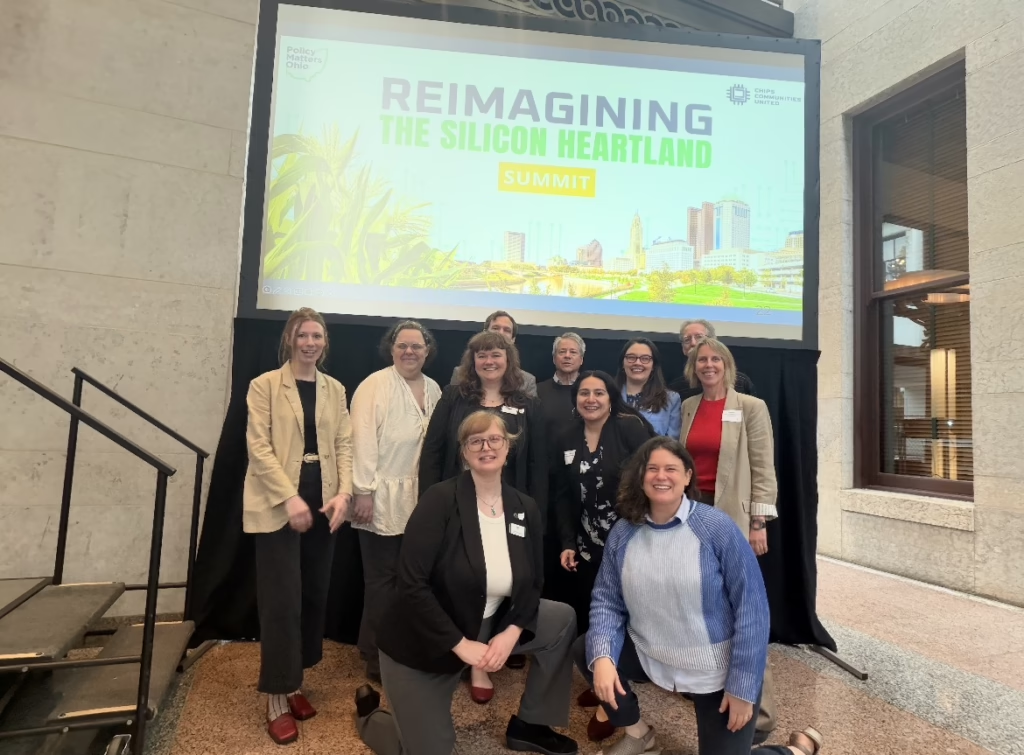
On May 22, 2026, Policy Matters Ohio teamed up with CHIPS Communities United to host “Reimagining the Silicon Heartland,” a one day conference analyzing the impacts and intersections of data centers and Intel’s projects in Ohio.
It’s no secret that big tech is changing the landscape of Ohio—literally and figuratively. The legislature and municipalities across the state are squaring up against some of the richest corporations in the world while trying to balance tech innovation and community needs. Engaged Ohioans are asking hard questions about what the development means for their communities and the future of Ohio. “Reimagining the Silicon Heartland” tackled three of the big questions:
- What is the impact on our resources?
- What are the real labor and workforce development opportunities?
- How do we hold the tech industry accountable?
Check out the full program here. (You may recognize some of the panelists!)

Three panels of experts tackled these topics, providing a multifaceted analysis of what it means to have big tech move into Ohio. In attendance were concerned citizens, activists, labor leaders, lawmakers at both the state and city level, and academics all looking to learn more about what this industry means for Ohioans.
Panel one focused on how big tech industries strain community resources. Semiconductor manufacturing and data center development both have serious impacts on water, land, air quality, and energy. Already Ohioans have seen the effects on their electric bills as prices in the PJM Interconnection (which serves Ohio) increased by 22% from 2024 to 2025.
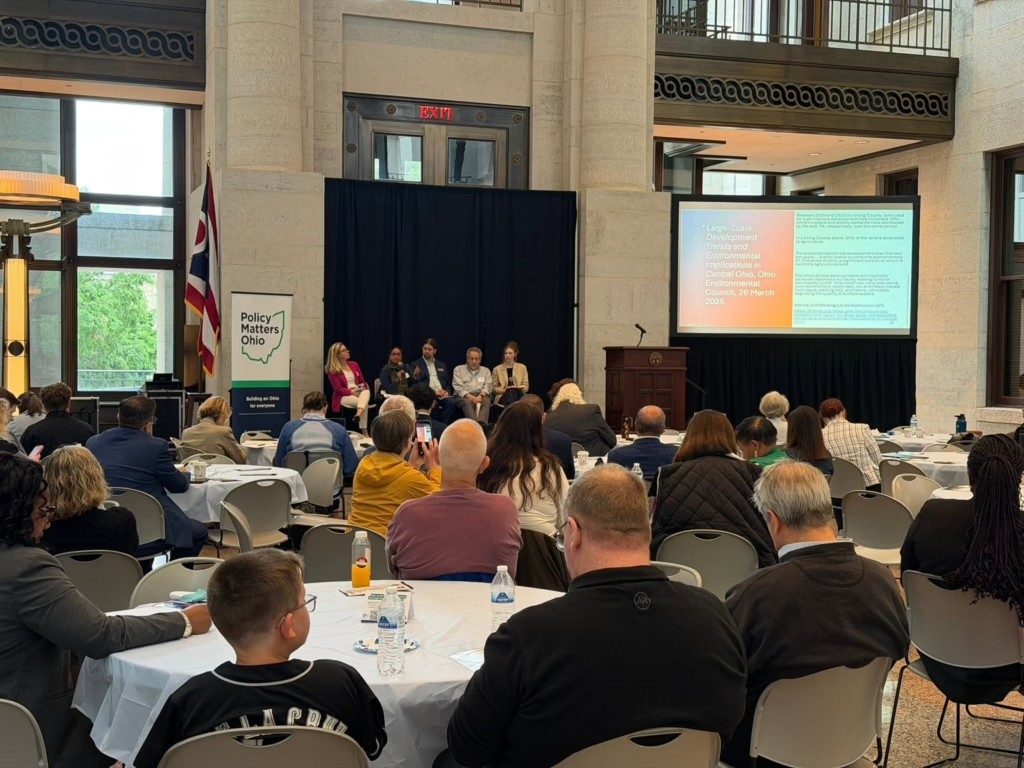
One panelist highlighted the physical changes made to the landscapes of Franklin and Licking County, where land-cover data show dramatic expansion between 2019 and 2024, largely due to Intel’s Ohio One project and multiple new data centers.
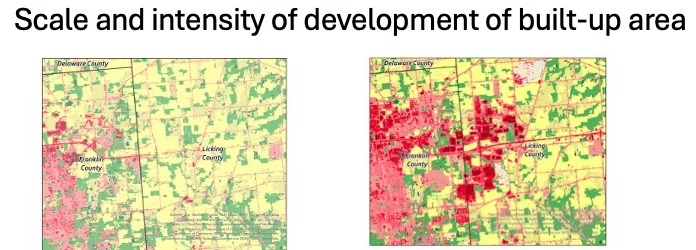
Graphic courtesy of Dr. Madhumita Dutta, Associate Professor of Geography, The Ohio State University.
An expert from Silicon Valley highlighted the changes that the area has gone through and what Ohio can learn from California’s tech boom. This includes water quality concern: the semiconductor industry is deeply tied to PFAS—forever chemicals that have been linked to various health problems when consumed. PFAS exist in the wastewater expelled by semiconductor plants and can contaminate drinking water sources. In Ohio, the city of Columbus is responsible for providing most of the water to both Intel and data centers in Licking County. A representative from Columbus Water and Power highlighted the challenges the city is facing while also providing an overview of how they plan to meet capacity and quality needs.
Later, local labor leaders sat down with a long-time labor organizer and a labor policy researcher from UC Berkeley’s Labor Center to discuss the job and workforce development opportunities associated with data center development. Representatives from the building trades noted a significant increase in work as a result of data center expansion.
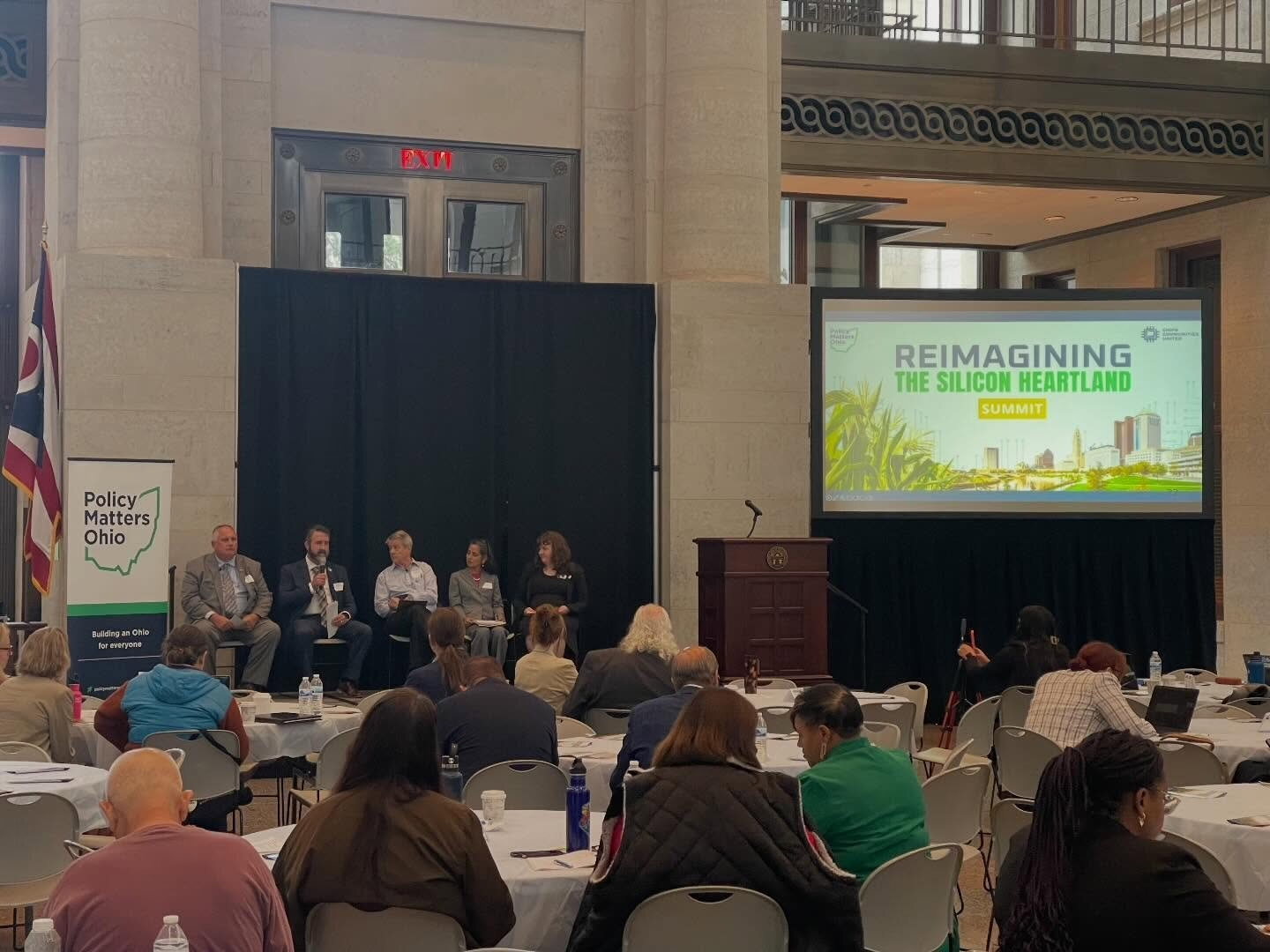
In 2026, it is projected that building tradespeople will eclipse 20 million work hours compared to 2023 where workers put in 9.8 million hours. Currently 40% of work hours are spent working on data centers, with the vast majority of data center developers utilizing union labor. Panelists also emphasized the importance of community input and the need for workers outside of the building trades to also have the opportunity to form unions.
Rounding out the day was a community-centered panel featuring advocates and policy experts discussing how smart development can happen. Panelists encouraged the state to develop a “regulatory floor” — a statewide set of minimum guardrails that allow local communities to advocate for their unique needs. (See our growing list of policy recommendations.)
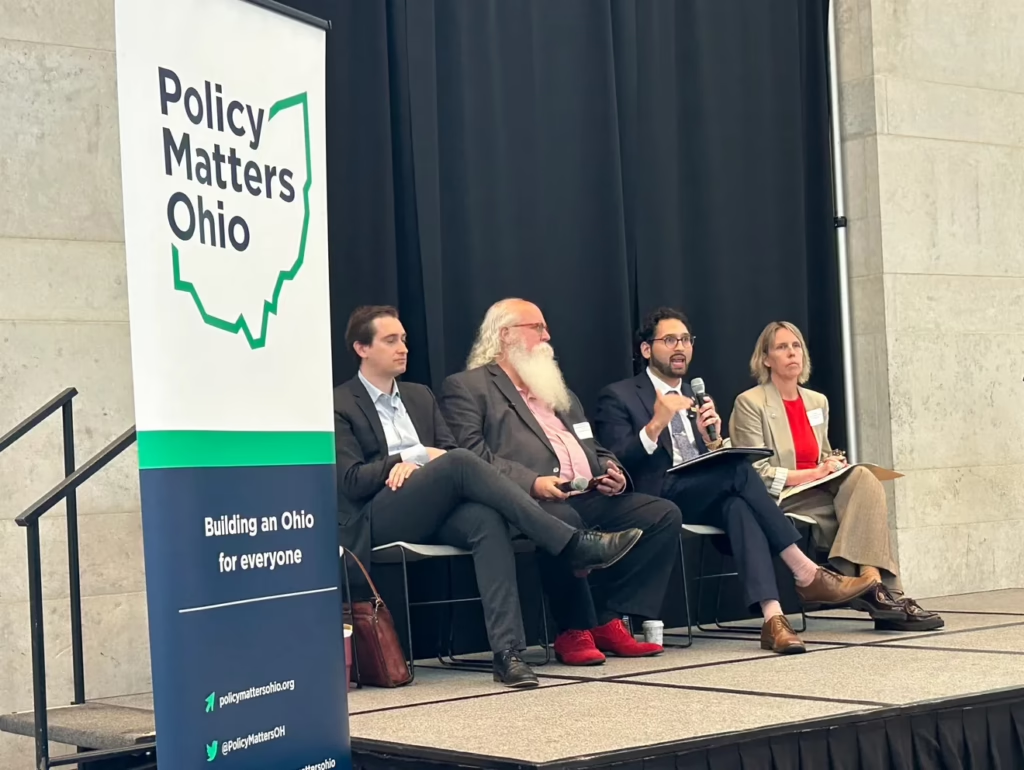
Panelists stressed the need for greater transparency, in the decision-making process. Communities across the state have sounded the alarm about policymakers entering development deals without all the relevant information — or without making that information public. Reports on water intake, water discharge, water additives, emissions, and energy costs allow municipalities to weigh the true costs and benefits of data center development and advanced manufacturing. They should all be part of the public debate and policy decisions. In cases where they haven’t, some communities imposed moratoriums on development, with the pause giving local leaders time to negotiate deals for greater community investment.
Ultimately, the day highlighted just how nuanced big tech development can be. The benefits reaped by the building trades are just as real and relevant as the community concerns about water quality, emissions, and energy use. Hannah Halbert, Policy Matters Ohio’s executive director, closed out the program and succinctly described how common ground and building power are necessary for smart development:
Instead of dividing the interests of tradespeople and community advocates, we need to organize around the places where they align. Shared interest is the key to building power, and building power is the only way to counterbalance corporate influence. With policies that require transparency, accountability, and real community control, legislators can ensure that all Ohioans share the benefits of development, build our economy from the middle out, and make Ohio a place that truly works for everyone.
Lame duck is an opportunity for legislators to act on data centers (and more)